
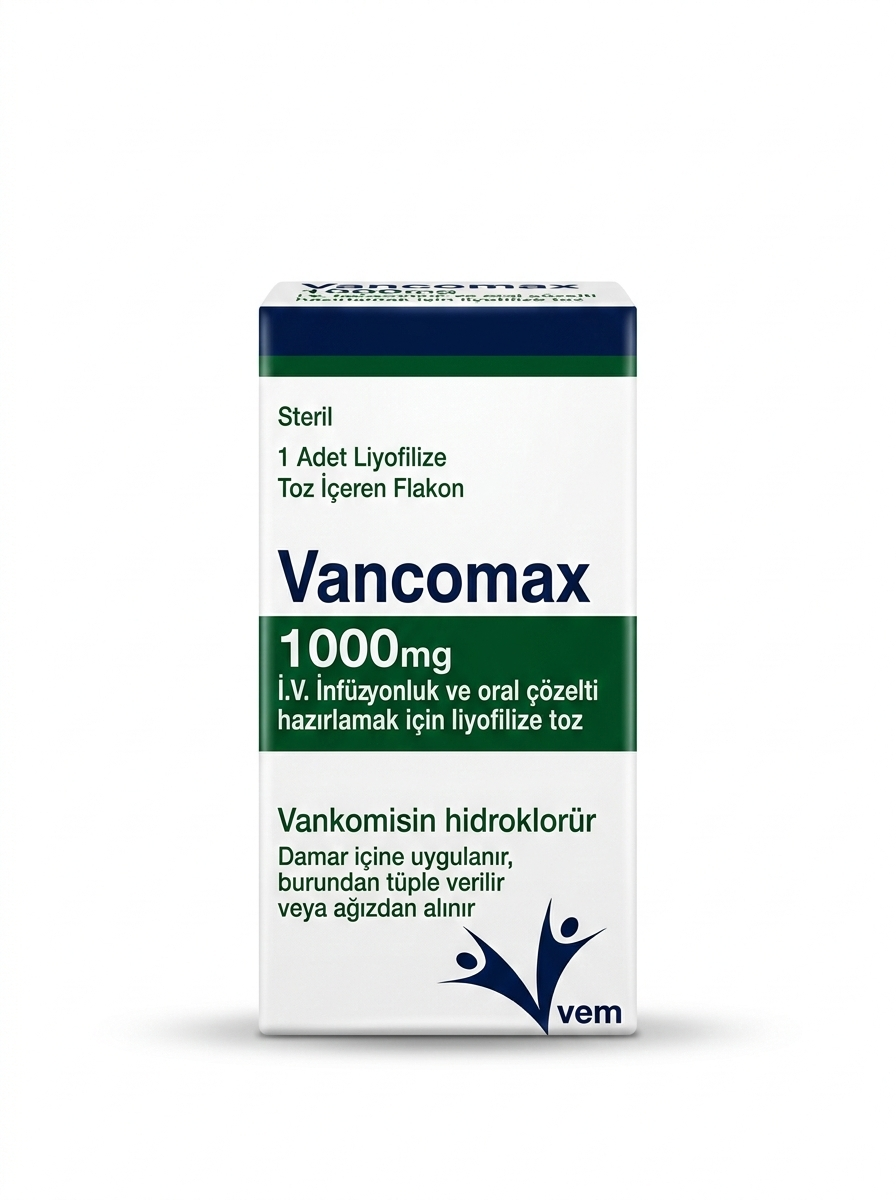
Vancomax® 1000 mg (Vancomycin Hydrochloride) Uses, Dosage, Side Effects
Vancomax® 1000 mg contains vancomycin hydrochloride, a strong antibiotic that treats serious bacterial infections. Doctors usually prescribe this medicine when other antibiotics do not work or when bacteria show resistance.
Vancomycin belongs to the glycopeptide antibiotic group. It works by stopping bacteria from building their cell walls. As a result, the bacteria weaken and eventually die. Therefore, the infection gradually clears from the body.
Doctors often use Vancomax® 1000 mg to treat severe infections such as bloodstream infections, bone infections, lung infections, and serious skin infections. In addition, doctors may prescribe this medicine to treat Clostridioides difficile–related intestinal infections.
Healthcare professionals administer this medicine in several ways depending on the condition. For example, doctors may give it through intravenous infusion to treat systemic infections. On the other hand, they may give it orally or through a nasogastric tube to treat intestinal infections.
Patients should always follow the doctor’s instructions carefully. Moreover, they should complete the full treatment to prevent bacterial resistance.
Key Information
Active Ingredient: Vancomycin Hydrochloride
Form: Lyophilized powder for IV infusion and oral solution preparation
Administration: Intravenous infusion, oral use, or nasogastric tube
Drug Class: Glycopeptide antibiotic
Common Use: Treatment of severe bacterial infections
Storage
Store this medicine at temperatures below 25°C. In addition, keep it away from moisture and direct sunlight. Always keep medicines out of reach of children.
What Is Vancomax® 1000 mg Used For?
Doctors prescribe Vancomax® 1000 mg to treat serious infections caused by certain bacteria.
For example, doctors may use it for:
Severe skin and soft tissue infections
Bone and joint infections
Lung infections such as pneumonia
Heart infections such as endocarditis
Severe intestinal infection caused by Clostridioides difficile
Furthermore, doctors often use vancomycin to treat infections caused by methicillin-resistant Staphylococcus aureus (MRSA). Therefore, it plays an important role in hospital infection treatment.
How Vancomax® 1000 mg Works
Vancomycin works by blocking the formation of bacterial cell walls. As a result, bacteria cannot maintain their protective structure.
Consequently, the bacteria become weak and die. Therefore, the body can eliminate the infection more effectively.
However, this medicine only treats bacterial infections. It does not work against viral infections such as the common cold or flu.
How to Use Vancomax® 1000 mg
Doctors determine the correct dose based on the patient’s condition and infection severity.
Healthcare professionals usually give the medicine slowly through intravenous infusion. This slow administration helps reduce certain side effects.
However, doctors may prescribe the medicine orally or through a nasogastric tube when treating intestinal infections.
Patients should always follow medical instructions carefully. In addition, they should not stop treatment early even if they feel better.
Possible Side Effects
Like all medicines, Vancomax® 1000 mg may cause side effects. However, many patients tolerate this medicine well.
Common side effects may include:
Nausea
Vomiting
Headache
Injection site irritation
Less common but serious side effects may include:
Kidney problems
Hearing problems
Allergic reactions
Skin rash
In addition, very fast IV infusion may cause Red Man Syndrome, which leads to skin redness and flushing. Therefore, healthcare professionals administer this medicine slowly.
Patients should contact a doctor immediately if severe reactions occur.
Medical Disclaimer
The information provided on this website is for educational and informational purposes only. It is not intended as medical advice, diagnosis, or treatment.
All medicines listed, including prescription drugs, should be used only under the supervision of a qualified healthcare professional. Always consult your doctor or pharmacist before starting, stopping, or changing any medication.
 Quick View
 Quick View
 Quick View
 Quick View